


Introduction
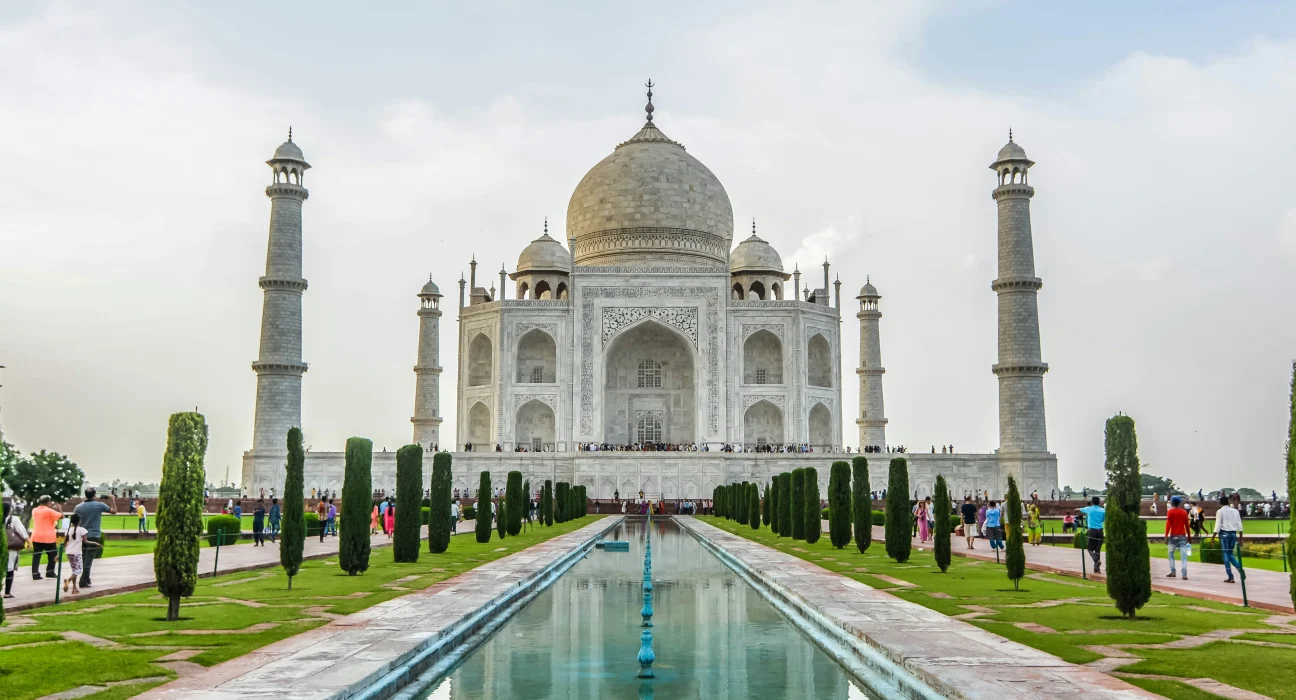
Imagine standing in front of the stunning white marble of the Taj Mahal at dawn, its domes glowing in the morning light—a monument forever linked to eternal love. But beneath this charming exterior lies a darker reality, full of ambition, tragedy, and exploitation.
In 1632, the Mughal emperor Shah Jahan had the Taj Mahal built as a tribute to his beloved wife, Mumtaz Mahal, who tragically lost her life while giving birth.
It took 22 years and involved more than 20,000 craftsmen. But was it really just a labor of love, or is it a symbol of kingship hiding some harsh truths? In this post we will explore.
Table of Contents
Historical context: Shahjahan’s reign and the birth of a monument
To understand the dark reality of the Taj Mahal, we must first go to the era of the fifth Mughal emperor, Shah Jahan, who ruled from 1628 to 1658. His reign was marked by prosperity and military conquests, as well as personal turmoil and economic stress.
Shahjahan’s complex personal lifestyles
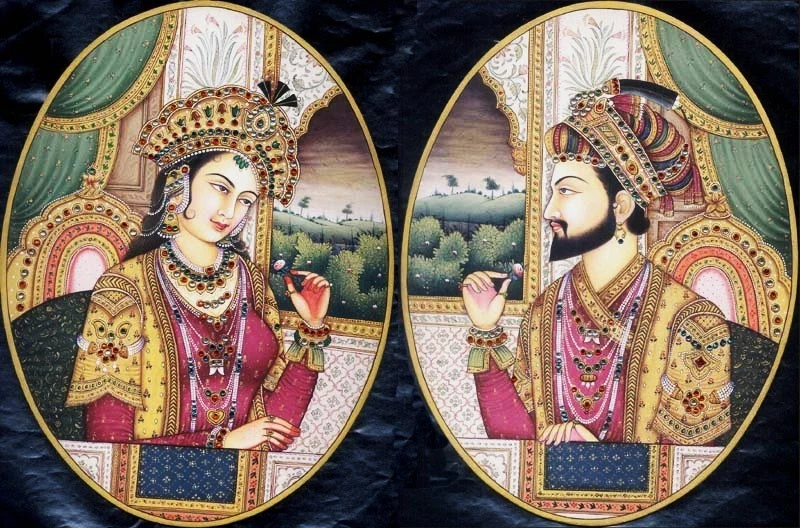
Shah Jahan, born Prince Khurram, was not untouched by the aid of intrigue. Historical information displays that he had seven official better halves and had the right of entry to a harem of thousands obtained through wars and alliances.
Mumtaz Mahal, his fourth wife (originally named Arjumand Banu Begum), was reportedly his favorite, but her story has darker shades. According to some accounts, Mumtaz was originally married to one of Shah Jahan’s generals, whom she allegedly killed to claim her. She gave birth to 14 children during 19 years of marriage and died at the age of 38 during the birth of her last child in 1631. After her demise, Shah Jahan married her sister, adding a layer of complexity to the story of “eternal love.”
- Key statistic: Mumtaz Mahal’s pregnancies occurred in common as soon as every sixteen months, underscoring the physical stress on women in the Mughal royal households.
- Case Study: Shah Jahan’s ardor for Mumtaz led him to build the Taj Mahal; however, his grief reportedly lasted a simple quick time earlier than his remarriage, suggesting that the monument served private in addition to political functions.
For extra data on the Mughal emperors, test out our insider’s guide to the records of the Mughal dynasty.
The Monumental Cost: Economic and Human Toll
The Taj Mahal’s creation cost a predicted 32 million rupees (equivalent to over $1 billion nowadays), draining the empire’s treasury and contributing to economic instability. This extravagance passed off amid famines and wars, exacerbating public struggling.
Labor Exploitation and Myths
Over 20,000 workers from throughout India, Persia, and Europe toiled for too many years beneath harsh conditions. While a famous myth claims Shah Jahan ordered the amputation of artisans’ arms to prevent replication, historians have debunked this no modern information supports it. Instead, the actual dark truth of the Taj Mahal lies inside the exploitation: Workers faced low wages, risky scaffolding, and exposure to poisonous materials like lead-based paints.
- Bullet Points on Worker Conditions:
- Artisans blanketed stonecutters, inlayers, and calligraphers, many relocated forcibly.
- Elephants transported huge marble slabs from 200 miles away, mainly leading to animal and human fatalities.
- Post-production, many people were left unemployed because the task halted after Shah Jahan’s imprisonment.
Debunking Myths: The Controversial Origins and Hidden Secrets
The dark truth of the Taj Mahal is amplified with the aid of enduring myths that mix fact with fiction, frequently fuelled by way of political agendas.
The Black Taj Mahal Legend
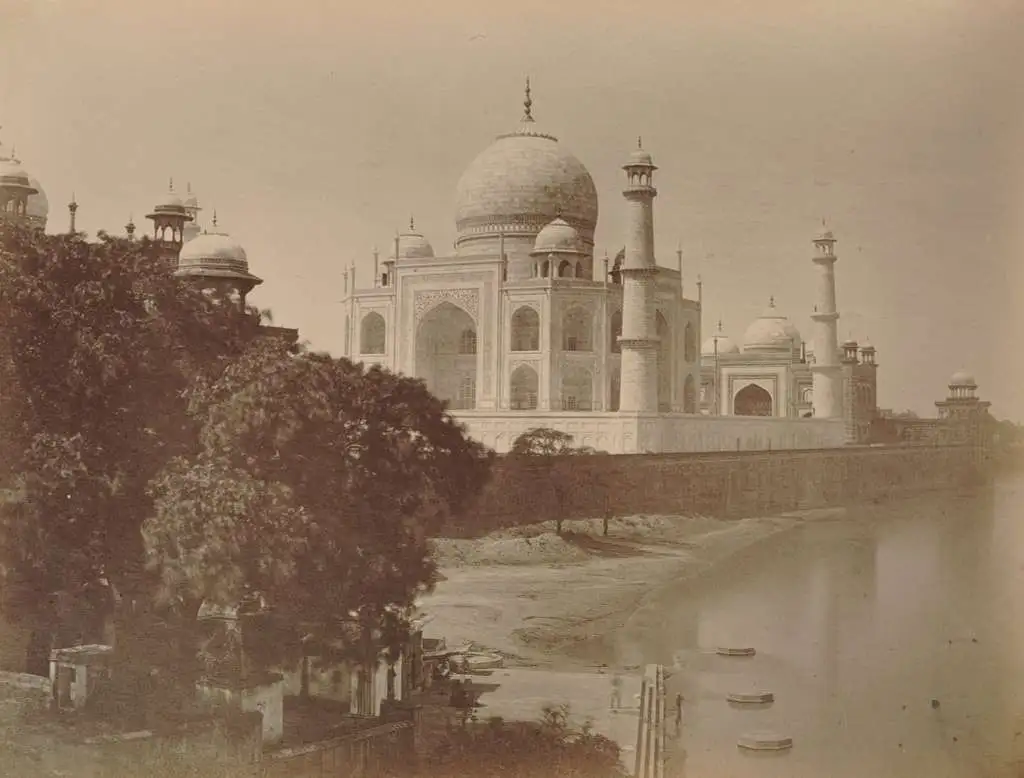
One continual story is that Shah Jahan deliberated a black marble Taj Mahal throughout the Yamuna River as his personal tomb, but his son Aurangzeb halted it.
Archaeological proof suggests that the ruins in front of the Taj may additionally have been lawn pavilions, without a rival monument remaining. This story is the basis of Shah Jahan’s downfall: he was deposed by Aurangzeb in 1658 and imprisoned in Agra Fort, spending his last years watching the Taj from afar—a poignant irony.
The Hindu Temple Theory: Fact or Fiction?
An arguable declaration shows the Taj Mahal changed into, firstly, a Hindu Shiva temple known as “Tejo Mahalaya,” appropriated through Shah Jahan. Proponents cite architectural elements like octagonal shapes and lotus motifs as “Hindu” features. However, this theory, popularized by pseudo-historian P.N. Oak, has been thoroughly debunked by scholars. Mughal sources, which include the Badshahnama, affirm it was constructed as a mausoleum. The Archaeological Survey of India (ASI) maintains no proof of a pre-Mughal temple.
Table – Myths vs. Facts About Taj Mahal Origins – The Dark Reality of Taj Mahal: Unveiling the Hidden Truths Behind the Icon of Love
| Myth | Fact | Source |
|---|---|---|
| Taj Mahal was a Shiva temple (Tejo Mahalaya) | Built from scratch in 1632; architectural style is purely Indo-Islamic with Persian influences. | BBC Reality Check |
| Locked rooms hide Hindu idols | The 22 sealed basement rooms (tahkhana) were summer retreats, closed after 1978 floods; no idols found in inspections. | BBC Article on Locked Rooms |
| Artisans’ hands were chopped off | Urban legend with no historical evidence; workers continued careers post-project. | The Hindu Op-Ed |
Architectural Mysteries: Hidden Spaces and Symbolism
Important corridors in the Taj Mahal’s design include false tombs; the tombs themselves are placed in a secret reduction chamber to prevent desecration—a practical measure in turbulent times.
Its minarets lean barely outward, an earthquake-resistant characteristic often mistaken for a flaw.
The Modern Dark Reality: Threats to the Taj Mahal
Beyond records, the darkish fact of the Taj Mahal persists today with environmental and upkeep challenges.
Pollution and Deterioration
Agra’s industrial pollution has yellowed the marble, prompting Supreme Court interventions. Acid rain from close-by factories erodes the facade, whilst the Yamuna River, once pristine, is now polluted.
- Statistics: Visitor numbers exceed 7 million yearly, causing overcrowding and putting on.
- Over 7–8 million vacationers go annually, far exceeding the recommended restriction of 40,000 in line with the day set via UNESCO.
- Air pollution levels in Agra frequently pass three hundred–500 AQI (hazardous class), specifically because of vehicular emissions and the Mathura oil refinery.
- The Taj Trapezium Zone (TTZ), a 10,400 square km covered location created in 1996, has not prevented commercial growth.
- Marble yellowing and black/brown spots as a result of insect excreta (Goecycla serratella) and sulphur dioxide have forced multiple “mud-p.C.” cleanings when you consider that 1994.
Over-Tourism and Human Exploitation Today
The darkish truth extends to the humans living in its shadow:
- Thousands of unauthorized guides, rickshaw pullers, and souvenir dealers operate in a grey economic system, often paying bribes to police.
- Child labor is not unusual in nearby marble-inlay workshops that claim to keep “400-year-vintage Taj traditions.”
- Agra’s citizens are afflicted by water scarcity, whilst the Taj gardens devour millions of liters day by day for fountains and landscaping.
Security Threats and Terror Risks
In 2000, the Indian Army foiled a Lashkar-e-Taiba plot to explode the Taj.
In 2024, ISIS-K propaganda magazines listed the Taj Mahal as an excessively costly symbolic target for Western vacationers.
The Dark Reality of Taj Mahal: A Summary of Key Revelations
| Aspect | Romantic Narrative | Hidden/Dark Reality |
|---|---|---|
| Reason for construction | Pure love for Mumtaz Mahal | Political propaganda + personal vanity project |
| Labor conditions | Artisans honored and well-paid | Exploited workers, dangerous conditions, low wages |
| Cost | Justified by beauty | Bankrupted the empire, contributed to Mughal decline |
| Shah Jahan’s fate | Died peacefully beside his love | Imprisoned by his son, spent 8 years staring at the Taj |
| Modern state | Pristine white wonder | Yellowing, polluted, overcrowded, under constant threat |
Conclusion: Beyond the Postcard Image
The Taj Mahal will forever be marketed as the ultimate monument to love; however, the dark truth of the Taj Mahal is a long way extra human—and therefore a long way extra compelling. It is a tale of grief mixed with megalomania, of breathtaking artistry constructed on the backs of exploited workers, of a loss of life river and a choking city, and of myths that refuse to die due to the fact they serve contemporary political agendas.
Next time you notice a superbly symmetrical sunrise photograph of the Taj, recall the 20,000 forgotten people, the bankrupt treasury, the imprisoned emperor, and the millions of vacationers slowly loving this monument to dying.
What shocked you the most about the darker side of the Taj Mahal?
Drop your thoughts within the feedback below, share this text with fellow records fans, and take a look at our related posts:
- The Forgotten Women of the Mughal Harem
- 10 Most Debunked Historical Myths in India
- Why the Red Fort Deserves More Attention Than the Taj
FAQ Section – The Dark Reality of Taj Mahal
1. Was the Taj Mahal clearly constructed by means of reducing employees’ palms?
No. This is a chronic urban legend with zero evidence in Persian courtroom chronicles, European tourist bills (Bernier, Tavernier), or archaeological information.
Skilled artisans persevered, running on unique Mughal initiatives after 1653.
2. Is it authentic that the Taj Mahal started as a Hindu temple referred to as Tejo Mahalaya?
No. This declaration, first made by P.N. Oak in 1989, has been rejected by the Archaeological Survey of India, the Supreme Court of India (2017), and mainstream historians. Carbon dating of wooden beams and unique farmans (royal decrees) verify production started out in 1632 on vacant riverside land.
3. Why is the Taj Mahal turning yellow in 2025?
Severe air pollutants from cars, brick kilns, and the Mathura refinery, mixed with insect droppings and acid rain, have discolored the marble. Despite repeated dust-percent remedies, pollution degrees stay dangerously high.
4. Can you go to the real tombs of Shah Jahan and Mumtaz Mahal?
The actual graves are in a sealed lower chamber without delay below the cenotaphs seen by travelers. Public entry has been prohibited since the 17th century to save you from desecration.
About The Author