

Introduction
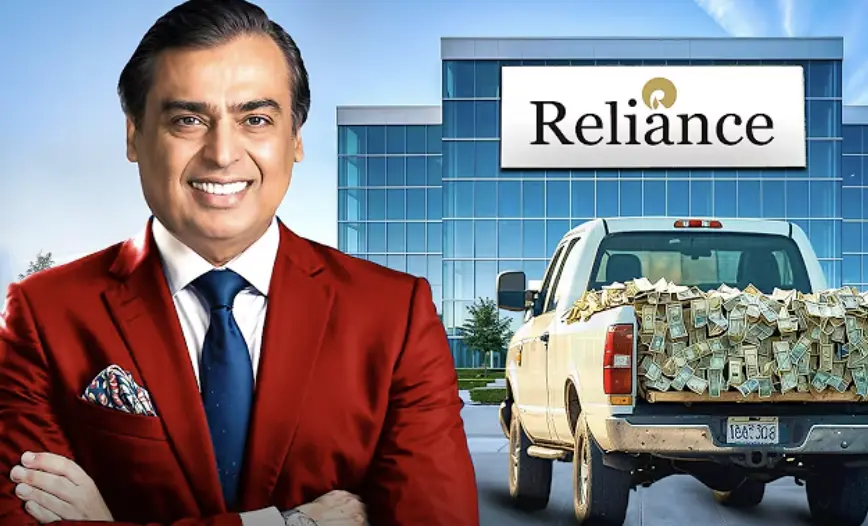
In the sparkling world of Indian activities, tycoons get names like Reliance Industries Limited (RIL) Chairman Mukesh Ambani. With a net worth of over $100 billion and a company’s net worth of over $200 billion, Reliance Company stands as a symbol of India’s economic increase. But under this facade of success lies the dark truth of the Reliance Company—a network of fraud, allegations of corruption, environmental loss, and aggressive marketing tactics that have raised their eyebrows for decades.
This blog post goes deeper into these hidden realities, highlighting the controversies that challenge the story of unrestrained innovation.
Dhirubhai’s adventure from a yarn trader to a billionaire is famous, but critics factor in questionable tactics. In the eighties, Reliance became accused of dodging import responsibilities via misclassifying polyester yarn, leading to a customs dispute that reportedly cost the authorities tens of millions.
A 1986 report from Indian Express revealed how Reliance allegedly affected bureaucrats to obtain licenses under the license Raj system.
The Rise of Dhirubhai Ambani: Genius or Manipulator?
- Prime Example: The Bear Cartel Attack on Reliance shares in 1985, where rivals sold the stock briefly, but Dhirubhai counteracted by aggressively buying back, allegedly with inside help. The incident popularized the stock culture in India but led to investigations of insider trading.
- Statistics: In 1990, Reliance had over 2 million shareholders, but in 1992, Hamish MacDonald’s book “Polyester Prince,” which detailed alleged stock manipulation, was prohibited in India due to legal threats from Ambani.
These early maneuvers set the tone for future controversy and mixed ambition with ethical gray areas. For more information on India’s business history, check out our inside manual on the evolution of Indian conglomerates.
Family fees and corporate divisions
After the death of Dhirubhai in 2002, the dark truth of the Reliance Company was elaborated, causing bitterness between sons Mukesh and Anil Ambani. The resolution in 2005 shared the empire, but not without public drama.
- Anil ambani vs. Mukesh ambani: Anil accused Mukesh of unjust real estate division, including gas fields. In 2008, a court case on gas supply from the KG-D6 basin emphasized family differences, with Anil claiming that Mukesh was declined on the family agreement.
- Effect: The fight cost shareholders billions of dollars in losses due to market prices. Today, Anil’s group is facing bankruptcy proceedings, while Mukesh’s group.
Allegations of fraud and corruption
One of the most alarming aspects of the dark truth of the Reliance Company includes allegations of repeated fraud ranging from resource utilization to economic malpractices.
Gas siphoning fraud: a billion-dollar scams
In 2025, the Supreme Court in Delhi decided on trust in the long-term dispute, accusing it of “dishonest fraud” by extracting gas from ONGC’s field, leading to unfair enrichment of over $1.729 billion.
- Case study: In 2009, ONGC claimed that Reliance extracted gas from adjacent blocks in the KG pool. ONGC was awarded $1.55 billion in an arbitration in 2016, but Reliance appealed. The verdict in 2025 confirmed the scam, a big blow.
- Statistics: According to government estimates, Reliance produced 60 billion cubic meters of gas from disputed fields between 2009 and 2013.
It is not isolated; in 2012, anti-corruption activist Arvind Kejriwal accused them of relying on the four-route cost of KG-D6 of $8.8 billion and reducing state royalties.
Ed raids and loan fraud
Anil Ambani-led Reliance Group faces an ED raid in 2025 in an RS 3000 crore loan fraud case involving false bank guarantees.
- Details: ED arrests officers, claims that funds were derived from Reliance Home Finance to group units. A separate report by 2024 wires highlighted regulatory lapses of SEBI, RBI, and IRDAI in supervision of Anil’s companies.
Table of Major Fraud Allegations:
| Year | Allegation | Amount Involved | Outcome |
| 2014 | Gas Migration Fraud | $1.729 billion | The court ruled against Reliance in 2025 |
| 2025 | Loan Fraud (Anil Group) | Rs 3,000 crore | ED raids and arrests ongoing |
| 2007 | Insider Trading via MoTech | Undisclosed | Allegations, no conviction |
Environmental violations and concerns about sustainability
Reliance’s industrial strength has reached an environmental cost, revealing another layer of the dark truth about the Reliance Company.
Contamination and regulatory fines
Reliance’s refineries, such as Jamnagar, have faced investigations into emissions. The 2022 Down to Earth report highlighted weaknesses in India’s EIA process, using Reliance’s Gujarat extension as a case study.
- Central violations: In 2024, NGT introduced a fine of Rs 1 crore on petrol pumps so as not to install steam recovery systems, even though it was later stayed. Sulfur dioxide and NOx emissions have contaminated local water bodies.
- Statistics: Reliance’s O2C business emits significant greenhouse gases; the report from 2022-23 recognizes an impact on water (higher use) and biodiversity.
Vantara Wildlife Center controversy
Anant Ambani’s Vantara, a 3,000-acre rescue facility, is facing allegations of abuse of water and illegal animal imports in 2024. A Supreme Court sat in 2025 and found the claims “baseless.”
- Balanced vision: While the Pulitzer Center praised the elephant’s rescue, critics and environmentalists argue that there is a PR feature in the middle of widespread pollution problems.
For environmentally friendly business tips, check out our sustainable practice guide.
Work utilization and workers’ rights issues
The dark truth of the Reliance Company extends to the workforce, with reports of utilization in a high-pressure environment.
Plant accidents and workers’ deaths
A post about Quora detailed the death of a worker in Jamnagar in 2017 due to a malfunction in machines and claimed coverage. Glassdoor Reviews criticizes “Utilization of New Employees” along with poor management.
- General context: India’s private sector, including Reliance, depends on contract work, leading to low wages and unsafe conditions. A 2016 Economic Times report on Walmart/GAP suppliers (analog) highlighted the abuses.
- Statistics: According to estimates, more than 50% of Reliance’s workforce is over 300,000 contractual, making them vulnerable to exploitation.
- Works long hours without overtime pay.
- Inadequate safety protocols in refineries.
- The migrant workhouse is compared to a “neocolonial” setup.
Monopoly and antitrust problems
Reliance’s dominance in telecom, retail, and media raises red flags of distrust, which is part of the dark truth of the Reliance Company.
Jio’s predator prices saw
JiO’s free data shooting from 2016 caught a 50% market share but met CCI investigations for predatory game pricing. A 2025 research assignment analyzed how this avoided investigation for “abuse of dominance.”
- Case Study: Bharti Airtel’s 2017 complaint claims prices below the costs; CCI rejected with reference to low initial ownership.
- Statistics: Jio captures 40% of the telecommunications market; the 2024 Disney merger creates 40% media control and allows concessions.
Mass market dominance
Reliance Retail’s extension through procurement, such as the Future Group (controversial 2020 agreement), reinforced fear of monopoly. The monthly review called it “monopoly-finance capital”.
- Table of Market Shares:
| Sector | Reliance share | Competitors |
| Telecom | 40% | Airtel (30%), Vodafone (20%) |
| Retail | 10% – 15% | Amazon, Flipkart |
| Media (Post-Disney) | 40% | Zee, Sony |
Political conditions and Crony capitalism
Any discussion about the dark truth of the Reliance Company is incomplete without its political relations.
Accused of favoring the government
Reliance donated heavily to parties; the ADR report from 2014 revealed that RS 100 million was given to Congress in 2009. After 2014, with claims in the Rafale Agreement (as the Offset Partner of Reliance), BJP became stronger.
- Big debates: In 2012, IAC claimed cost overruns of KG-D6 in favor of Reliance.
- Statistics: Zero taxes paid to 1997 according to parliamentary debate due to loopholes.
- Balanced: Some look at this as standard lobbying; no penalties in major cases.
For the political activity of Nexus, read our Crony Capitalism in India.
FAQ
1. What is the largest fraud related to the Reliance Company?
The judgment in the Delhi High Court in 2025 about the fraud of gas siphoning, where Reliance was accused of unfair enrichment worth $1.729 billion, comes as a big battle. https://m.economictimes.com/industry/energy/oil-gas/big-setback-for-reliance-win-for-govt-in-appeal-accusing-ambanis-co-of-fraud-unjust-enrichment-of-over-1-729-bn-for-siphoning-gas/articleshow/118243523.cms
2. Has Reliance been involved in environmental violations?
Yes, this also includes NGT fines for pollution control errors and emissions from refineries, although some penalties occurred. https://legal.economictimes.indiatimes.com/news/litigation/ngt-stays-rs-1-crore-fine-on-reliance-industries-over-installation-of-vapour-recovery-system/112023451
3. Does Reliance have a monopoly in India?
Although it is not a complete monopoly, its dominance in telecom (Jio) and the media (after the Disney merger) has triggered an antitrust examination by CCI. https://www.reuters.com/markets/deals/seal-india-merger-disney-reliance-may-need-dilute-cricket-dominance-2024-08-22/
4. What are the work problems at Reliance?
Claims include utilization of workers, insecure matters and abuse of contract work, reports of accidents, and low wages. https://www.glassdoor.ie/Reviews/Employee-Review-Reliance-Industries-RVW60156444.htm
Conclusion
The Dark Truth of the Reliance Company paints a complex image: a strength that drives India’s growth but is still plagued by allegations of fraud, environmental lapses, work issues, monopolistic practices, and political entanglements. From the $1.729 billion gas fraud to the ongoing ED probe, these controversies highlight the need for greater transparency.
While Reliance has been acquitted in some cases, like Vantara, this pattern raises questions about responsibilities in mega corporations. As consumers and investors, it is important to stay informed. What are your views on the bad side of Reliance? Share in the comments, subscribe to many revelations, or check out our related posts about the Adani controversy. Let’s discuss!
About The Author